


Posted in:
Tools for Paddling with Respect Along the BC Coast
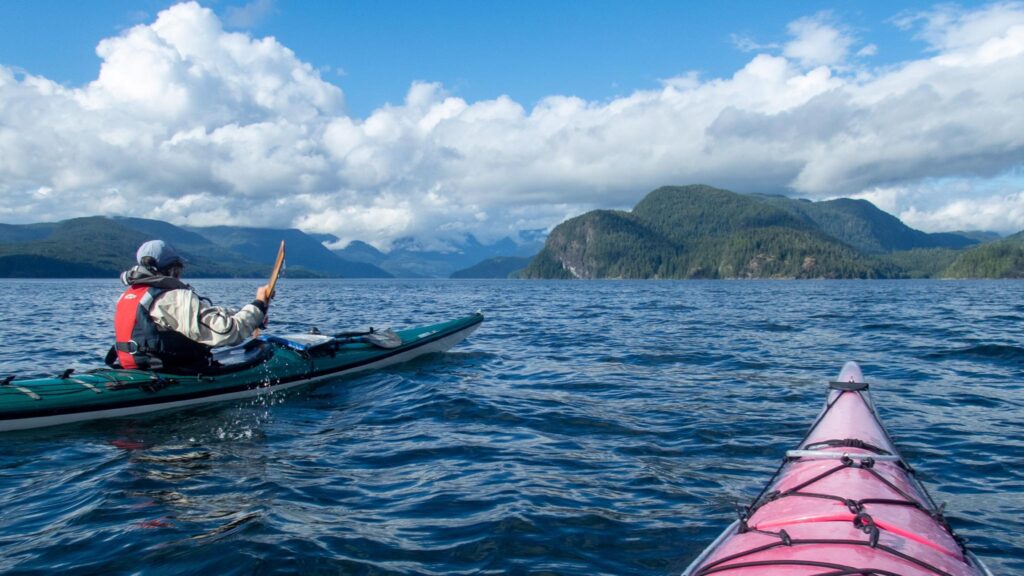
Photo: BC Marine Trails Association
Tools for Paddling with Respect Along the BC Coast
Story by Esther Tung
Every inch of British Columbia’s Pacific coastline is traditional First Nation territory. For millennia, First Nations have honed and carried traditional knowledge for stewarding their lands and waters. With its deep fjords and sculpted sea stacks, the coast is also a paddler’s paradise.
On the coast of north Vancouver Island, the six nations that comprise the Nanwakolas Council have developed a partnership with the BC Marine Trails Association (BCMT) to educate non-Indigenous paddlers to respect First Nations rights and to paddle in a good way. The BCMT has a long history of collaboration and trust with the Nanwakolas Council, particularly with the Mamalilikulla First Nation. BCMT and the nations are working together to educate paddlers on their responsibilities on Indigenous territories.
Partnering With the Nanwakolas Council
One of BCMT’s strategic priorities is to disrupt conventions around marine recreation and mold them to align with First Nation’s protocols and practices. Historically, non-Indigenous visitors have operated under the assumption that the coast is a public amenity, open to anyone at any time. However, coasts are very sensitive environments. Carelessness or ignorance can quickly degrade a fragile ecosystem. It doesn’t take much to disturb the soil, and waste can take a long time to break down if not treated carefully.
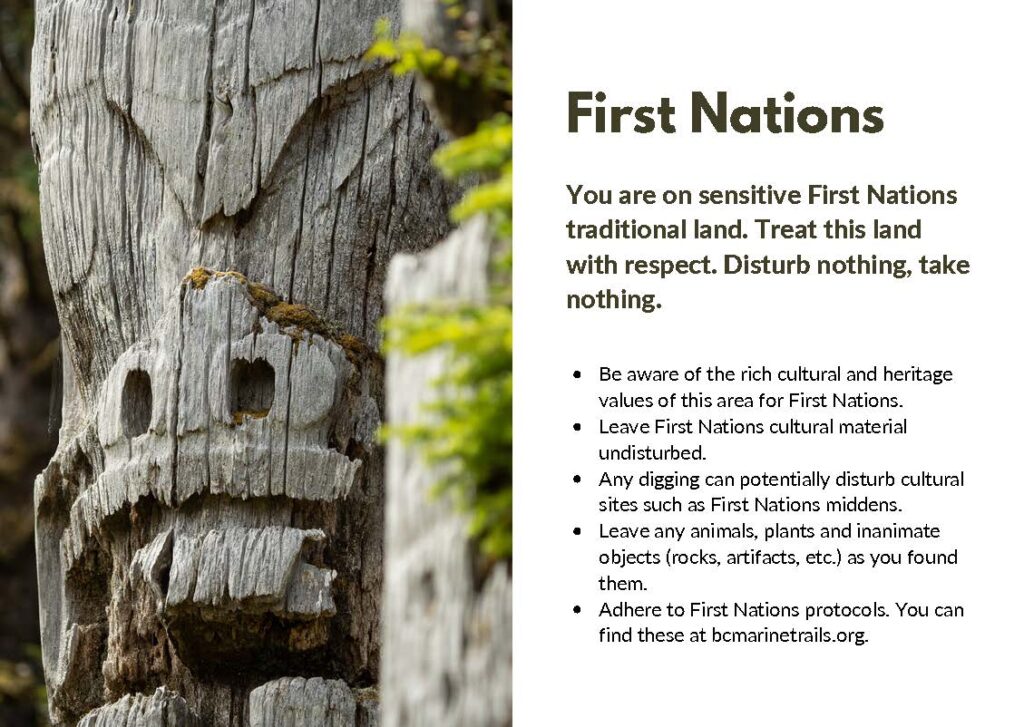
To educate non-Indigenous paddlers on how to be respectful stewards, BCMT and the Nanwakolas Council have collaborated on several projects. For example, in 2023, the Mamalilikulla Nation and BCMT released a “visual orientation to the territory,” a beautifully illustrated guide to respectful recreation on Mamalilikulla territories. It introduces visitors to the Mamalilikulla creation story, approved recreation sites, and the team of Mamalilikulla Guardians that visitors might encounter.
Upholding Indigenous Self-Determination
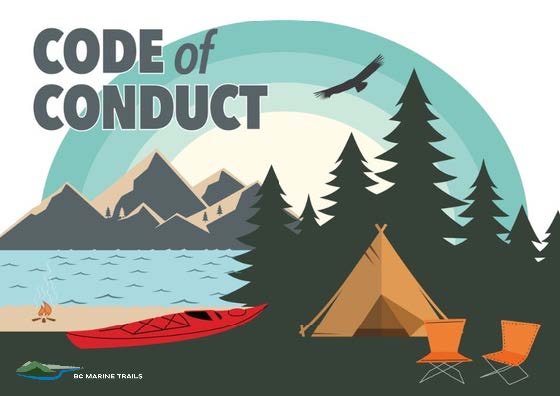
The principles of Indigenous self-determination are embedded within BCMT’s newest tool for outdoor recreationists, the Marine Code of Conduct. The Marine Code of Conduct is a mechanism for First Nations communities to communicate their laws, values, and priorities with visitors, and to remind visitors of Indigenous Peoples’ inherent rights and responsibilities to govern and manage their land. The code ensures visitors understand how to travel lightly and respectfully. It also covers best practices for campfires, interacting with wildlife, and minimizing one’s footprint.
For example, the code reminds visitors that digging or moving objects can degrade culturally significant sites such as middens.
Visitors can make the most of the Marine Code of Conduct by using it as part of their trip planning in tandem with the BC Marine Trails Map, one of BCMT’s most popular offerings, with more than 35,000 users a year.
The Marine Trails Map is getting a gradual makeover to reflect First Nations authority and priorities. Most sites along the coast today were established without First Nations consent or engagement. BCMT is reviewing the sites on their map with each of the 75 First Nations along the coast, seeking their consent on which sites should stay on the map. To date, they’ve secured consent from about 20 nations, many by way of introductions by the Nanwakolas Council.
BCMT and the Nanwakolas Council are also collaborating with the Marine Planning Partnership to broadcast these best practices more widely. BCMT published an accompanying workbook that can be used in workplaces or schools to reinforce learning. This past summer, BCMT introduced the code to a total of 181 outdoor education high-school students who were preparing for trips to various marine site trails.
With these various initiatives to integrate reconciliation and Indigenous sovereignty into marine recreation, the hope is that more paddlers will understand that the coast is not “untouched wilderness.” Instead, they are working to cultivate the understanding that Indigenous Peoples have safeguarded these lands and waters for millennia, and only with care and respect to Indigenous practices will the wonders of the coast be available for thousands more years to come.
Published on: February 2, 2026
SHARE